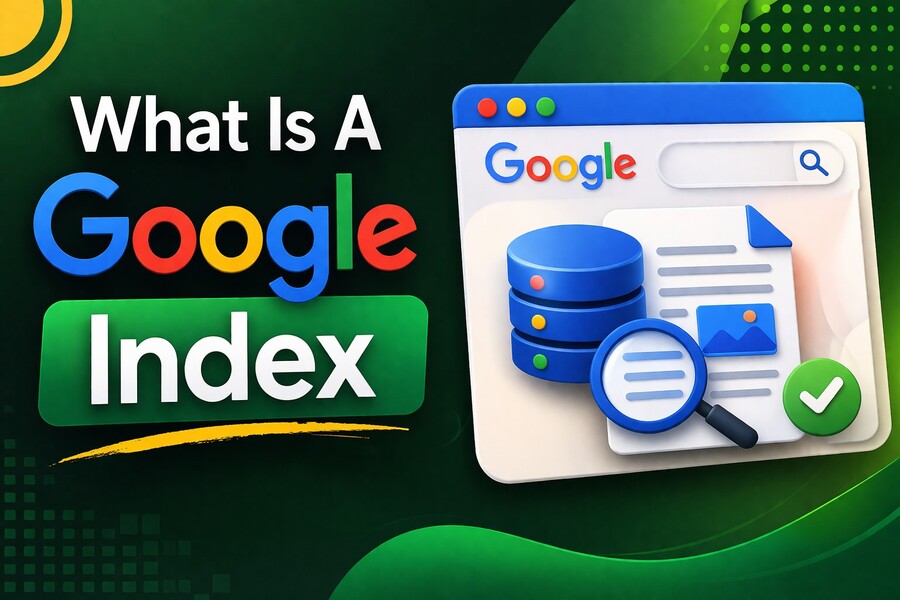
If you have ever asked, “What Is A Google Index?” you are asking one of the most important questions in search engine optimization. Your page cannot rank, attract steady search traffic, or compete in Google results until Google has stored and understood it inside its index.
In simple terms, a Google index is the searchable database Google builds after crawling, rendering, and classifying pages across the web, and that makes it the foundation of every organic SEO result you care about.
What is a google index in simple terms
A Google index is the massive database Google uses to store information about web pages it has processed and judged eligible for search. When someone searches, Google does not scan the live web from scratch in that moment, because it retrieves matching results from this stored index instead. Several sources compare it to a filing cabinet, a book index, or a digital library, and those comparisons work because the index exists to organize pages so they can be found quickly.
The easiest way to picture it is to think about how users sort information before they can act on it, much like you might test and improve your word puzzle skills with Custom Wordle before trying harder word challenges with confidence. Google does something similar at web scale, because it sorts words, topics, links, media, and page signals before deciding what can appear for a search query. That is why indexing is not a minor technical detail, since it is the basic condition that makes search visibility possible in the first place.
How google builds the index
Google builds its index through a sequence that starts with discovery and ends with storage. Search engines first crawl pages, then parse and render them, and finally analyze the text, headings, links, images, videos, and other signals before classifying the page in the proper location. Yoast explains that parsing helps Google recognize structure and connect words to topics and entities, which shows that indexing is about understanding, not just saving content.
That process works best when your site is easy to navigate, because search engines rely on paths and structure to move through content efficiently, much like learning what are the different types of puzzles helps you see that each puzzle format demands a different method. A page that is cleanly structured, internally connected, and technically accessible gives Google clearer signals during crawling and rendering. A page with blocked resources, messy architecture, or weak content gives Google more reasons to delay, ignore, or skip indexing entirely.
Why indexing matters before rankings happen
Indexing matters because a page that is not in Google’s index has no realistic chance of ranking for valuable searches. Multiple sources make the same point clearly, stating that if Google cannot index your site, it cannot show that site in search results, whether the query is highly competitive or highly specific. That means indexing comes before rankings, clicks, leads, and revenue, which is why site owners who chase rankings without checking index status often waste time.
You can think of it as the difference between having content and having searchable content, because Google only pulls from stored pages it has accepted into its system, just as learning how to play word wipe helps you turn random letters into a playable strategy instead of leaving them scattered on the board. A well-written page that is not indexed is invisible in practical terms, while a simpler indexed page at least has a chance to compete and improve. Once you understand that order, your SEO decision-making becomes sharper and more effective.
Crawl, render, index, and rank are not the same thing
Many website owners treat crawling and indexing as if they were identical, but they are separate stages with separate outcomes. Crawling means Googlebot discovers a page and visits it, rendering means Google processes the page more like a browser to understand its visible experience and resources, indexing means Google stores and classifies the page, and ranking happens later when Google selects results for a query. A crawled page can still remain unindexed, which is why Search Console messages like “crawled, currently not indexed” matter so much.
This distinction helps you diagnose problems more accurately, because the fix for poor crawling is not always the fix for poor indexing, and neither is the same as the fix for weak rankings. If Google cannot render important page elements, it may misunderstand your content, and if it sees low value, duplication, or blocking signals, it may choose not to index the page at all. In other words, ranking is not the first SEO battle you fight, because indexing decisions happen earlier and can close the door before ranking begins.
What stops pages from entering google’s index
Pages usually stay out of the index for a small group of recurring reasons, and most of them are preventable. Across the sources, the most common blockers include noindex tags, duplicate content, weak or thin content, robots.txt restrictions, orphaned pages, slow loading speed, server errors, and incorrect canonical handling. WebFX also notes that pages marked as non-canonical are less likely to be indexed, while Passionfruit adds that improper redirects and low-quality content can also keep pages out.
A second problem is that some pages are technically reachable but not worth storing from Google’s perspective. If your page says little, repeats another page, or sits outside your internal linking structure, Google may crawl it without treating it as a strong candidate for the index. That is why high-quality SEO work blends technical cleanup with editorial improvement instead of treating indexing as a button you press once.
How you can check whether a page is indexed
You can check index status with simple methods before you move into deeper diagnostics. One common method is a site search in Google, while a stronger method is Google Search Console, which shows whether a specific URL is indexed, excluded, discovered, or crawled without indexation. Ralf van Veen also points to server logs, sitemap checks, and organic traffic monitoring as useful ways to confirm whether search engines are reaching and storing your pages properly.
Search Console is usually the best first stop because it gives you URL-level signals instead of guesswork. If you see indexing issues there, you can compare affected pages for patterns such as missing internal links, template errors, weak content, or accidental directives. That kind of comparison helps you move from vague SEO frustration to evidence-based action.
How to improve your chances of getting indexed
The best way to improve indexing is to make your site easier to crawl, easier to understand, and more worth storing. The sources repeatedly recommend maintaining a clean XML sitemap, using Google Search Console, improving internal linking, removing accidental noindex directives, checking canonicals, increasing site speed, and publishing original content that serves a real purpose. These are not flashy steps, but they are the kind of high-impact basics that support large-scale SEO growth.
You should also pay attention to mobile usability and freshness, because Passionfruit notes that more than 60% of searches now happen on mobile devices, and regularly updated content gives Google a reason to revisit your site. That does not mean every page needs constant rewriting, but it does mean stale, thin, and isolated content tends to underperform in indexing decisions. A disciplined publishing system with sound technical SEO gives Google clearer reasons to include more of your pages.
Conclusion
What Is A Google Index? It is the searchable system that determines whether your content can even enter the contest for organic visibility, and that alone should change how you prioritize SEO work. Instead of jumping straight to rankings, you should first make sure important pages are crawlable, renderable, internally connected, technically clean, and valuable enough to earn a place in Google’s database.
Once you approach SEO from that foundation, your work becomes more focused because you stop treating visibility as luck and start treating it as a process. Pages that deserve traffic need more than keywords, because they also need accessibility, structure, originality, and consistent technical maintenance. When you understand what a Google index is, you make better publishing choices, fix the right problems faster, and give your site a stronger path toward lasting search performance.