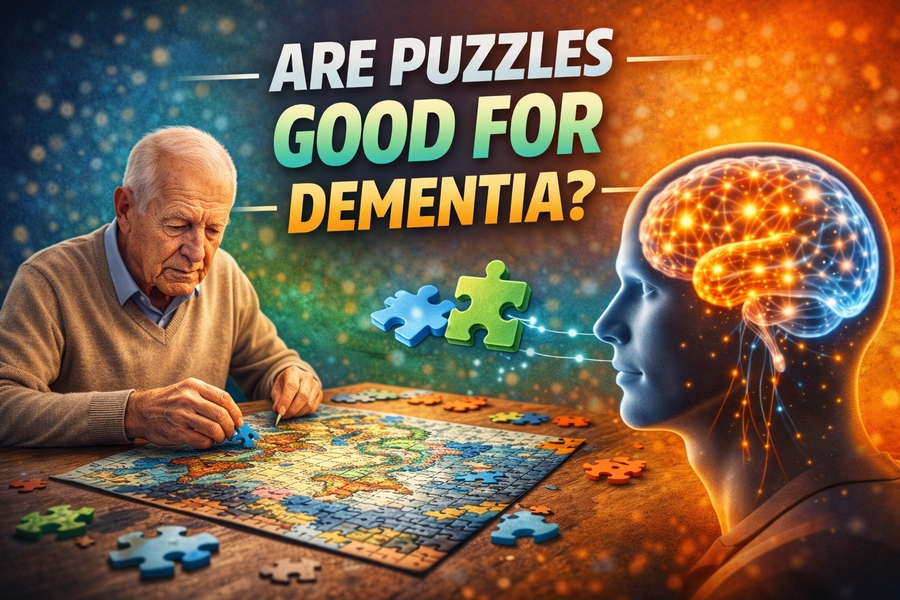
Cognitive decline and dementia are major health concerns for older adults. As the population ages, more individuals are looking for ways to reduce their risk of developing conditions like Alzheimer's and other forms of dementia. A common suggestion is engaging in mental exercises, such as solving puzzles. But are puzzles truly effective in preventing or slowing the progression of dementia?
In this article, we’ll explore the potential benefits of puzzles for brain health, the latest research findings, and practical recommendations for incorporating brain-stimulating activities into your routine.
Understanding the Link Between Puzzles and Cognitive Health
Puzzles, whether word games, crosswords, or jigsaw puzzles, have long been recommended as activities to boost brain health. Engaging in mentally stimulating tasks has been linked to a reduction in cognitive decline. Studies suggest that consistent engagement in puzzle-solving can enhance specific cognitive functions, such as memory, attention, and problem-solving skills. Research indicates that these activities may also help delay the onset of dementia by keeping the brain active and healthy.
For instance, studies have shown that individuals who regularly participate in crossword puzzles experience better cognitive performance. These individuals exhibit slower cognitive decline, particularly in the areas of verbal reasoning and memory. While such studies are observational and cannot definitively prove causality, the evidence points to a positive correlation between puzzle-solving and improved brain health.
You can explore further how solving word puzzles may contribute to mental sharpness with resources like free custom wordle, which offers a great variety of challenges for brain engagement.
The Types of Puzzles and Their Cognitive Benefits
Different types of puzzles target various cognitive functions. For example, word puzzles, such as crosswords, can significantly enhance vocabulary and verbal memory. Jigsaw puzzles, on the other hand, improve spatial awareness and problem-solving skills.
One of the key benefits of puzzles is their ability to engage multiple brain regions simultaneously. For instance, solving a crossword puzzle requires memory recall, pattern recognition, and focus. This type of cognitive stimulation may help strengthen neural connections and enhance overall brain function.
Not only do puzzles improve cognitive performance, but they also provide a sense of accomplishment when solved, which can boost mental well-being and provide a positive psychological effect. Incorporating different types of puzzles into your daily routine can target multiple areas of cognitive function, offering a well-rounded approach to brain health. You can learn more about the different types of puzzles and their impact on mental sharpness in articles like what are the different types of puzzles.
The Role of Puzzles in Preventing Dementia
While no single activity can guarantee the prevention of dementia, engaging in puzzles may reduce the risk of developing cognitive decline. The brain, like any muscle, requires regular exercise to stay in optimal condition. Just as physical exercise strengthens muscles, mental exercise can help preserve brain function.
Studies involving older adults have found that those who engage in mentally stimulating activities, such as puzzle-solving, have a lower risk of developing Alzheimer's disease and other forms of dementia. Regular brain exercises are believed to create cognitive reserves, which help the brain withstand age-related damage. Additionally, people who challenge themselves with complex puzzles tend to show better mental performance in their later years.
If you’re interested in enhancing your cognitive abilities with puzzle-solving, you might want to explore tools like how to create a crossword puzzle in word, where you can craft your own engaging puzzles.
Cognitive Reserve: How Puzzles Can Strengthen Your Brain
Cognitive reserve refers to the brain's ability to adapt to aging or injury by using its available resources more efficiently. The idea behind cognitive reserve is that the more you engage your brain in stimulating activities, the more resilient it becomes to damage. Puzzles, as a form of mental stimulation, are one of the most effective ways to build this reserve.
By engaging in challenging tasks like puzzles, individuals create a network of neural connections that can compensate for areas that may become damaged due to aging or disease. It’s not just about keeping the brain busy; it’s about building a stronger, more adaptable mind. Puzzles help you strengthen cognitive pathways and enhance your brain's capacity to process information, thus delaying or even preventing the onset of dementia.
You can start boosting your brain's cognitive reserve by diving into activities like puzzle games. For a great mental workout, you might enjoy playing wordscapes, which can keep you engaged and sharp.
Puzzles as a Tool for Social Interaction and Mental Stimulation
In addition to their cognitive benefits, puzzles can also provide a social outlet. Group activities, such as solving puzzles together, can foster social connections and stimulate mental engagement. Engaging in puzzle games with family or friends can enhance mental well-being and provide opportunities for social interaction. Social engagement has been shown to reduce the risk of developing dementia, as it keeps the brain active and prevents isolation, a major risk factor for cognitive decline.
Furthermore, puzzles that require collaboration can enhance problem-solving skills, as participants work together to solve the challenge. This not only sharpens cognitive functions but also improves communication skills and teamwork. Integrating puzzles into your social routine can have a significant positive impact on both your cognitive health and your emotional well-being.
For more tips on fostering social connections and stimulating mental health, you can read about the importance of social interaction in puzzle-solving in resources like how designers can expand their portfolio using an animation maker.
The Psychological Benefits of Solving Puzzles
Puzzles do more than just enhance cognitive functions; they also offer significant psychological benefits. Completing puzzles provides a sense of achievement and satisfaction, which can positively affect mental health. The act of solving a puzzle triggers the brain’s reward system, releasing dopamine, the neurotransmitter associated with feelings of pleasure and accomplishment.
This sense of accomplishment can boost self-esteem and motivate individuals to continue engaging in similar tasks. For people experiencing mild cognitive decline or dementia, accomplishing even small challenges can offer a significant psychological lift, reducing feelings of frustration or helplessness. Moreover, puzzles can help people maintain a sense of independence and confidence in their mental abilities.
Mental exercises, including puzzles, can be an excellent way to reduce stress and improve mood. For those seeking a way to enhance their mental resilience, incorporating puzzles into daily routines can be a fun and effective solution.
Practical Tips for Incorporating Puzzles into Your Routine
Incorporating puzzles into your daily life doesn’t have to be difficult. Here are some practical tips to get started:
- Set aside time for puzzles: Schedule a regular time each day to engage in puzzle-solving activities. Even 15–30 minutes a day can provide substantial cognitive benefits.
- Mix it up: Try different types of puzzles, such as jigsaw puzzles, crossword puzzles, or logic games, to engage different areas of the brain.
- Start simple and increase difficulty: Begin with puzzles that match your current skill level and gradually increase the difficulty as you become more proficient.
- Play with others: Solve puzzles with friends or family to add a social element to the activity.
You can also learn how to create your own crossword puzzles and tailor them to your preferences by reading guides like how to design a crossword puzzle in Word.
Conclusion
Puzzles are more than just a fun pastime; they are powerful tools for maintaining cognitive health. Regular engagement in puzzle-solving activities can improve memory, enhance problem-solving skills, and even delay the onset of dementia. While puzzles alone cannot prevent dementia, they should be part of a broader strategy for maintaining brain health, including exercise, proper nutrition, and social engagement. By incorporating puzzles into your daily routine, you’re not just challenging your mind—you’re helping it stay sharp for years to come.
Engage in puzzles, improve your cognitive abilities, and reap the psychological and social benefits that come with it. Whether you’re playing solo or in a group, these games provide a fun and rewarding way to maintain mental sharpness as you age.